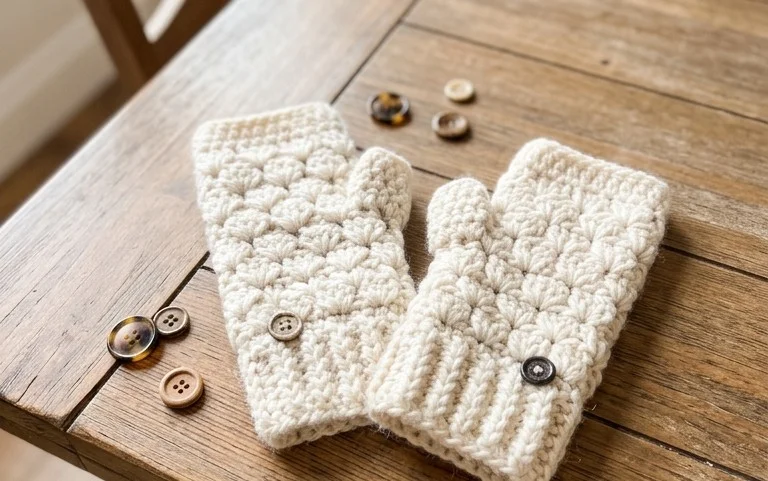
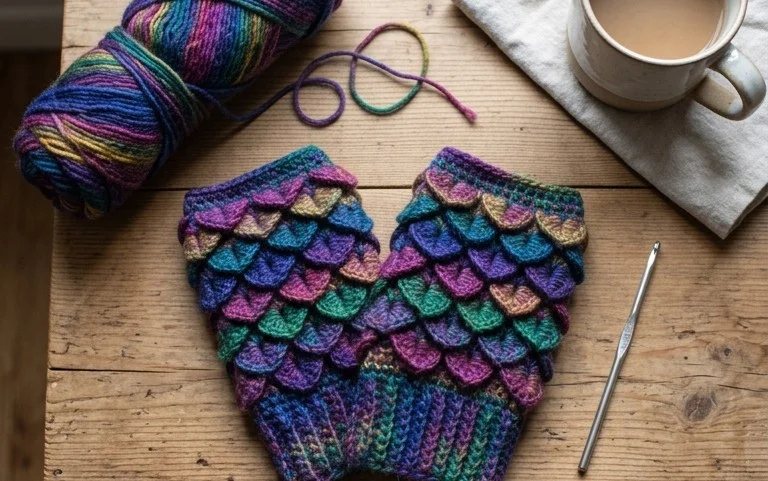
Dragon Scale Fingerless Gloves: Free Crochet Pattern
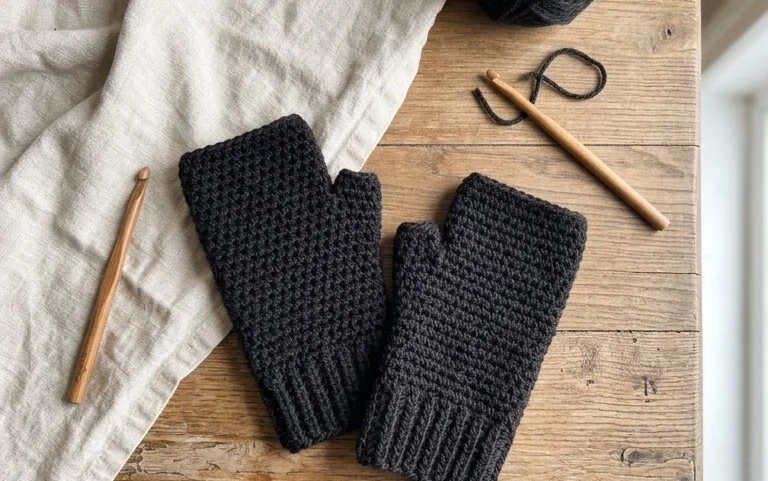
Raised crochet scales give these fingerless gloves a bold, layered look, while the open fingers leave your hands free to type, turn pages, or hold a warm mug. The fabric feels textured and cozy around the wrists, making this pair a useful project for chilly mornings and thoughtful handmade gifts. The scale stitch takes a little patience at first, but its repeating pattern becomes easier to follow once you have worked a few rows. Comfortable beginners can take their time, and experienced crocheters can enjoy watching the scales build across the fabric. You’ll learn how the scale stitch creates its overlapping texture and how the glove shape leaves room for your thumb, with tips for keeping the edges neat and the fit comfortable.
Why You’ll Love This Pattern
A firm cotton dishcloth is useful at the sink, and the alternating single-crochet and double-crochet rows give this one a simple ridged texture. The pattern uses one rectangular piece, so there are no seams or parts to assemble. It is a good first project for practicing even row edges, and a single cloth is small enough to finish in an afternoon.
Use one color for a tidy everyday cloth or switch colors every few rows to use up cotton leftovers. Keep in mind that changing colors creates extra ends to weave in. The finished cloth measures about 8.5 inches square, a handy size for washing dishes or wiping counters.
The row pattern was easy to remember, and the ridges make the cloth feel sturdy. I finished mine in one evening.
— Maya, beginner crocheter
Pattern Overview & Skill Level
- Skill Level: Beginner. You need to chain, single crochet, double crochet, and turn your work.
- Approximate Time: About 2–3 hours, depending on your pace and how often you stop to check your stitches.
- Construction: Work one flat rectangle in rows, alternating single-crochet and double-crochet rows. The turning chains do not count as stitches.
- Finished Dimensions & Sizing: About 8.5 inches wide by 8.5 inches tall after washing and drying flat. Your exact size depends on your tension and yarn.
Gauge: In the alternating-row pattern, aim for 14 stitches and 15 rows over 4 inches. Make a small swatch if you want to check size before starting. A tighter gauge makes a smaller, firmer cloth; a looser gauge makes a larger, softer one.
Materials & Supplies Needed
- Yarn: About 75 yards of worsted-weight (#4) cotton yarn. Choose one color, or use two or more colors for stripes. Cotton absorbs water and holds up well to regular washing.
- Hook Size: 5.0 mm / H-8 crochet hook. Use the hook that gives you the stated gauge; cotton can feel stiff if your stitches are too tight.
- Notions: Tapestry needle for weaving in ends, scissors, and a ruler or tape measure for checking gauge.
- Substitutions: A cotton-linen blend can work, though it may feel less soft and can drape differently. Avoid fuzzy yarn, which is harder to wash and less practical for scrubbing. A different yarn weight changes the finished size and yardage, so check your gauge and expect to use more or less yarn.
Stitch Guide & Abbreviations (US Terms)
- ch = chain.
- sc = single crochet: insert the hook in the stitch, yarn over and pull up a loop, yarn over and pull through both loops.
- dc = double crochet: yarn over, insert the hook in the stitch, yarn over and pull up a loop, yarn over and pull through two loops, then yarn over and pull through the last two loops.
- st = stitch; sts = stitches.
- rep = repeat.
The ch-1 at the start of a single-crochet row and the ch-2 at the start of a double-crochet row are turning chains only. Do not work into them or count them as stitches. Make the first stitch of each row in the first stitch of the previous row.
Step-by-Step Pattern Instructions
Dishcloth
- Foundation: Ch 31. The chain closest to the hook is the first chain you will work into.
- Row 1: Sc in the second ch from the hook and in each ch across. Turn. (30 sts)
- Row 2: Ch 2, dc in each st across, working the first dc into the first stitch. Turn. (30 sts)
- Row 3: Ch 1, sc in each st across. Turn. (30 sts)
- Rows 4–32: Continue alternating rows: on even-numbered rows, ch 2 and dc in each st across; on odd-numbered rows, ch 1 and sc in each st across. Turn after every row. (30 sts each row)
- Finish: After Row 32, cut the yarn, leaving a tail long enough to weave in. Pull the tail through the loop on your hook to fasten off. Thread the tail onto a tapestry needle and weave it through several stitches on the wrong side. Weave in the foundation tail the same way. Trim the ends close without cutting the fabric.
Lay the cloth flat and check that the sides are straight. If the edges curl, dampen it and smooth it into shape before it dries. Do not stretch it hard; excessive stretching can leave the rows longer than the stitches are wide.
Care & Washing Instructions
- Wash cotton cloths in warm water, up to about 40°C (104°F), with similar colors. Follow the yarn label if it gives a lower temperature.
- Dry flat when possible, smoothing the edges as the cloth dries. Cotton may shrink slightly in a hot dryer.
- Reshape while damp and let the cloth dry flat; blocking is optional, but helps square uneven edges.
Pro Tips & Common Mistakes to Avoid
- Keep your tension steady, especially in the foundation chain. If the chain feels much tighter than your rows, use a larger hook just for the chain or work it more loosely.
- Count the stitches at the end of each row. A missed first stitch can make the cloth narrower over time, while accidentally working into a turning chain can add stitches.
- Weave yarn tails back and forth through the backs of several stitches, changing direction once. This helps the ends stay secure through repeated washing.
- To adjust the width, add or remove chains in multiples of one, then work the same number of stitches across each row. More stitches and extra rows use more yarn; changing the width alone will also change the finished shape.
Frequently Asked Questions
Can I use acrylic yarn instead of cotton?
You can, but acrylic absorbs less water and may not work as well for drying dishes. It can also feel warmer and less firm. Choose a smooth worsted yarn, check its care label, and expect the cloth’s texture and finished size to differ.
How can I make the dishcloth smaller or larger?
For a narrower or wider cloth, change the starting chain and work one stitch into each chain after the first. For a shorter or taller cloth, stop sooner or add rows. Keep the same stitch pattern, and plan for the yardage to change with the finished size.
Is this a good first crochet project?
Yes. It uses two basic stitches and a repeated row sequence. The main things to watch are putting the first stitch into the first stitch of each row and keeping 30 stitches across. If your edges are uneven at first, a gauge swatch gives you a chance to practice before making the cloth.
Can I sell dishcloths made from this pattern?
Check the designer’s terms before selling finished items made from a published pattern. If you are following your own version, follow any applicable pattern or licensing terms, and describe the materials and care instructions accurately.
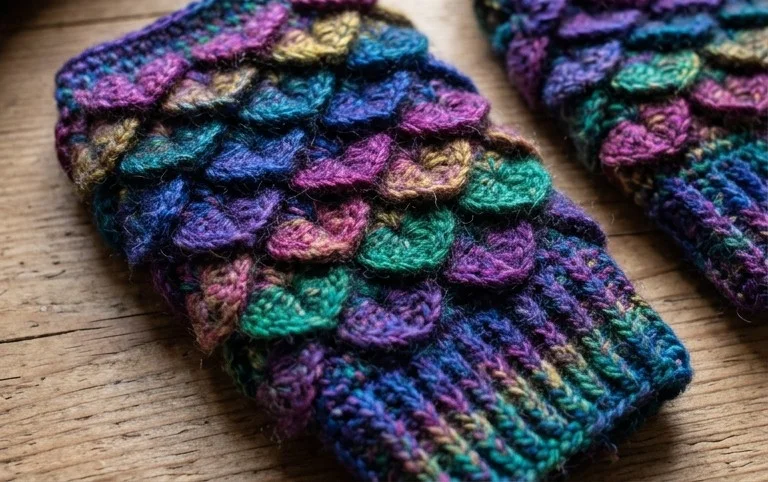
Finishing a pair of scale-textured gloves is satisfying because each raised row gives the fabric more shape, and the open fingers keep the finished pair practical for everyday wear. For a simple variation, choose a different solid color so the layered stitches stand out in a new way. Take a photo with the gloves laid flat or worn on your hands, then share it on Pinterest or your favorite social platform; a close-up will show the scale texture clearly. If you adjust the fit, note the changes in stitch count or length so you can make the second glove match. When you’re ready for another project, explore more free crochet patterns on the blog.