Easy Shell Stitch Fingerless Gloves Free Crochet Pattern
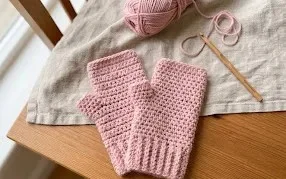
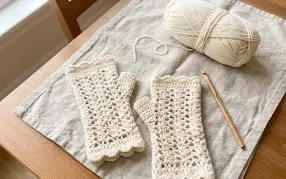
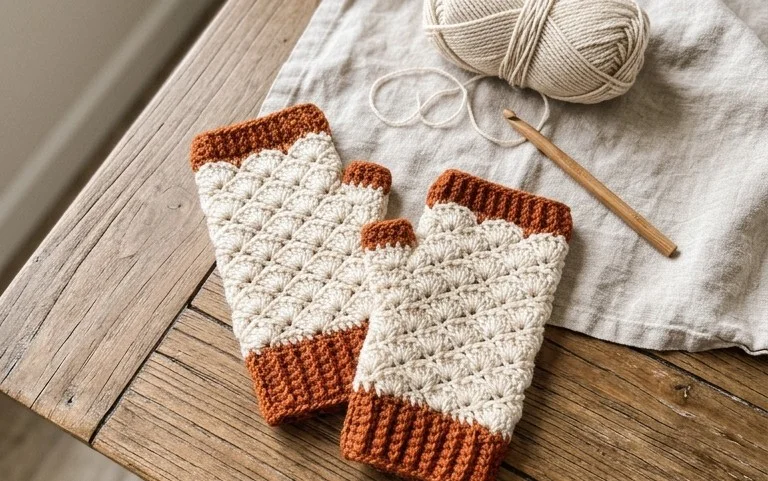
Shell stitches give these fingerless gloves a softly scalloped texture, while the open fingers leave your hands free to type, read, or hold a warm mug. The fabric feels cozy around the wrists without covering the fingertips, making this a practical project for chilly mornings and cool evenings. If you enjoy making thoughtful handmade gifts, a pair is small enough to finish without a long stretch of crochet time. Beginners who are comfortable with basic stitches can practice keeping their shell clusters even, and more experienced makers can settle into the repeating pattern. The instructions walk you through the shell stitch and the construction of the gloves, with tips for checking fit as you work. Choose a favorite color and enjoy watching the texture take shape row by row.
Why You’ll Love This Pattern
A firm cotton fabric and simple single crochet stitches make this dishcloth useful for everyday washing and wiping. The pattern works flat in rows, so you do not need to join rounds or manage shaping. It is a good first project for practicing even tension, and its repeated rows are easy to pick up between other tasks.
One skein usually provides enough yarn for a cloth, making this a practical way to use leftover worsted-weight cotton. The finished cloth measures about 7.5 inches square, a handy size for the sink or a small cleaning basket. Cotton also absorbs water well and can be washed repeatedly.
I made this during a quiet evening, and the plain rows helped me keep my stitches even. It came out a useful size for washing dishes.
— Mara, home crocheter
Pattern Overview & Skill Level
- Skill Level: Beginner. You need to know how to chain and single crochet.
- Approximate Time: About 2–3 hours, depending on your pace and how often you stop to check your tension.
- Construction: The cloth is worked flat in back-and-forth rows, with no seams or separate pieces.
- Finished Dimensions & Sizing: Approximately 7.5 x 7.5 inches (19 x 19 cm) after washing and drying flat. Small differences are normal with hand crochet.
Materials & Supplies Needed
- Yarn: About 90–110 yards of worsted-weight (#4) 100% cotton yarn in one color. Cotton is absorbent and handles frequent washing.
- Hook Size: 4.0 mm / G-6. Use the hook that gives you a firm fabric without making your hands uncomfortable.
- Notions: Tapestry needle for weaving in the two ends, scissors, and a ruler or measuring tape.
- Gauge: 16 single crochet stitches and 18 rows measure about 4 inches (10 cm) after washing and drying. Gauge affects the finished size and yarn use.
- Substitutions: A cotton-linen blend is suitable and may feel slightly firmer or drape more than pure cotton. Choose a similar worsted weight and check your gauge. A different yarn weight will change the cloth’s size and texture; acrylic is less absorbent and may not suit hot cookware or warm cleaning water.
Stitch Guide & Abbreviations (US Terms)
- ch: Chain.
- sc: Single crochet. Insert the hook in the stitch, yarn over and pull up a loop, yarn over again and pull through both loops.
- st / sts: Stitch / stitches.
- sp: Space. In this pattern, the chain space at the row edge is not used as a stitch.
Work each single crochet into the top loops of the stitch from the previous row. The turning chain does not count as a stitch. This keeps the stitch count steady and gives both sides a tidy edge.
Step-by-Step Pattern Instructions
Dishcloth
- Foundation: Make a slip knot and ch 31. Keep the chain relaxed so the lower edge does not pull in.
- Row 1: Sc in the second ch from the hook and in each ch across. Turn. (30 sts)
- Row 2: Ch 1, sc in each st across. Turn. (30 sts)
- Rows 3–34: Repeat Row 2, working one sc in every stitch across and turning at the end of each row. Each row has (30 sts).
Finishing
Fasten off after Row 34, leaving a tail about 6 inches long. Pull the tail through the last loop to secure it. Thread the tail onto a tapestry needle and weave it through the stitches on the edge, changing direction once so it is less likely to work loose. Weave in the foundation tail the same way. Do not knot the ends on the surface, where they can catch while washing.
Wash and dry the cloth before checking its final measurements. If one edge looks slightly uneven, gently smooth the cloth into a square while it is damp. This simple pattern has no separate border, so keep the first and last stitch of each row easy to identify as you work.
Care & Washing Instructions
- Wash cotton in a washing machine with similar colors at up to 40°C (104°F), or follow the yarn label if it gives a lower limit.
- Dry flat when possible to help the cloth keep its square shape; reshape the edges while damp.
- Lightly block by smoothing the damp cloth to its measurements. Avoid stretching the corners sharply.
Pro Tips & Common Mistakes to Avoid
- Keep tension steady: A very tight foundation chain can make the bottom edge narrower than the rest of the cloth. If your chain feels stiff, remake it with a slightly larger hook, then switch back to the 4.0 mm hook for Row 1.
- Count across each row: Check for 30 stitches before turning. It is easy to miss the last stitch at the far edge, especially when the turning chain sits close beside it.
- Secure ends neatly: Weave each tail through several stitches, reverse direction, and trim only after it feels secure. This helps prevent the ends from loosening in the wash.
- Adjust size with a plan: To make a wider cloth, begin with more chains while keeping one fewer stitch than the chain count in Row 1. Add rows for extra length. A larger cloth uses more yarn, and changing the hook or yarn weight also changes the finished dimensions.
Frequently Asked Questions
Can I use a different cotton yarn?
Yes. Choose a similar worsted-weight cotton or cotton-linen blend and make a small gauge check. A finer or bulkier yarn will change the cloth’s dimensions and may require a different hook. Check the yarn label for washing instructions.
How can I make the dishcloth smaller or larger?
For a smaller cloth, use fewer starting chains and work fewer rows. For a larger cloth, add chains and rows. Keep Row 1’s stitch count one less than the foundation chain, and expect a larger version to use more yarn.
Is this pattern suitable for a first crochet project?
Yes. It uses only chains and single crochet stitches, with no shaping or joining. Count the 30 stitches at the end of each row, and check that your edges remain straight as you work.
Can I sell dishcloths made from this pattern?
Check the designer’s terms before selling finished items, and follow any credit or selling requirements provided there. If you sell the cloth, describe its fiber and care needs accurately.
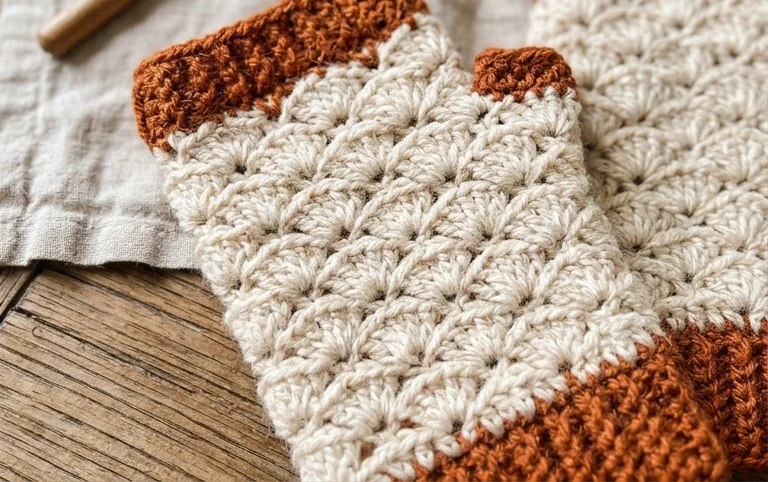
Once the last stitches are finished, you’ll have a textured pair of gloves that keeps your wrists warm while leaving your fingers free for everyday tasks. The shell pattern gives the fabric a pretty, raised look, and the compact size makes this a satisfying project to finish and wear. Try a contrasting color for the cuffs, or use a softer yarn if you want a warmer feel, checking your gauge since a different fiber can change the fit. If you make a pair, share a photo on Pinterest or your favorite social platform; it’s always nice to see the colors and yarn choices other crocheters use. Then browse the blog for more free crochet patterns to keep your hook busy.