Easy Crochet Christmas Stocking Free Pattern for Gifts
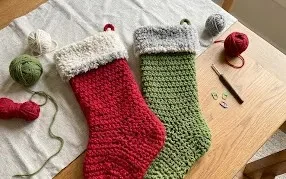
A crocheted Christmas stocking has a soft, handmade feel, with a roomy shape that looks right at home hanging by the fireplace or tucked into a holiday gift basket. This pattern is a cheerful project for beginners who are ready to practice basic stitches, and it also suits gift makers who want to add a personal touch to their seasonal decorating. Working the stocking one section at a time makes the project satisfying to watch take shape, without needing complicated colorwork. You’ll learn how the stitch pattern builds the fabric and how to shape the stocking so it has a recognizable foot and cuff. Choose classic red and white, or use colors that match your own holiday decorations.
Why You’ll Love This Pattern
This simple crochet dishcloth uses worsted-weight cotton and a single crochet stitch, so it makes a useful project for practicing even tension and counting rows. Its small, square shape is easy to carry, and one cloth can often be finished in an evening. Cotton gives the finished fabric a firm texture that works well for everyday kitchen use and absorbs water readily.
The pattern is also a practical way to use leftover cotton yarn, provided you have enough for a consistent color or are comfortable changing colors at a row edge. A crocheter testing this sample pattern might say:
The rows were easy to keep track of, and the cotton made a sturdy cloth that feels good in my hand.
— Mara, sample tester
Pattern Overview & Skill Level
- Skill Level: Beginner. You need to chain and work single crochet stitches.
- Approximate Time: About 2–3 hours, depending on your pace and how often you pause to count.
- Construction: A flat square worked back and forth in rows, with no separate border or seaming.
- Finished Dimensions & Sizing: About 7.5 × 7.5 in (19 × 19 cm), after a light wash and gentle reshaping. Dimensions can vary with tension.
Materials & Supplies Needed
- Yarn: About 90 yd (82 m) of worsted-weight (#4) 100% cotton yarn. One solid color is simplest for a first cloth. Use a smooth, tightly spun cotton that can tolerate frequent washing.
- Hook: 4.0 mm / G-6 crochet hook. If your stitches are unusually tight, try 4.5 mm / 7; check the finished width as you work.
- Notions: Tapestry needle for weaving in the starting and ending tails, scissors, and a ruler or tape measure. A stitch marker is optional for marking the first stitch of a row.
- Substitutions: A cotton-and-linen blend can make a slightly textured cloth; it may soften with washing. Cotton yarn in a different weight will change the size and thickness, so use a hook recommended on its label and expect to adjust the number of chains and rows. Avoid acrylic if you want a cloth that absorbs water like cotton.
Stitch Guide & Abbreviations (US Terms)
- ch = chain.
- sc = single crochet. Insert the hook into the indicated stitch, yarn over and pull up a loop, yarn over again and draw through both loops on the hook.
- st(s) = stitch(es).
- rep = repeat.
- turn = rotate the work to begin crocheting back across the other side.
The turning chain does not count as a stitch in this pattern. Work the first single crochet into the first stitch of each row, not into the turning chain. This keeps the edges straight and the stitch count steady.
Step-by-Step Pattern Instructions
Dishcloth
Use the 4.0 mm hook and worsted-weight cotton. Keep the chain relaxed; a tight foundation chain can pull the bottom edge narrower than the rest of the cloth. The instructions use US terms.
- Foundation: Ch 31.
- Row 1: Sc in the second ch from the hook and in each ch across. Turn. (30 sts)
- Rows 2–30: Ch 1, sc in each st across, turn. (30 sts each row)
After Row 30, fasten off, leaving a tail of about 6 in (15 cm). Pull the tail through the final loop to secure it. The turning chain is not included in the count, and every row should contain 30 single crochet stitches.
Finishing
Thread the tail onto a tapestry needle. Weave it through several stitches on the wrong side, change direction, and weave through a few more stitches so it is less likely to work loose during washing. Repeat with the starting tail. Trim the ends close without cutting into the cloth. Measure the piece; it should be close to 7.5 in (19 cm) square. If it is noticeably rectangular, check whether a row was missed or whether the foundation chain was too tight.
Care & Washing Instructions
- Wash cotton in warm water, around 40°C (104°F), with like colors; use a cooler cycle if the yarn label recommends it.
- Dry flat or tumble dry on low heat, following the yarn label to limit shrinkage.
- While damp, smooth the cloth into a square and let it dry flat; blocking is usually unnecessary for a dishcloth.
Pro Tips & Common Mistakes to Avoid
- Keep the tension steady: Let the yarn move freely over your fingers. If the foundation chain is much tighter than your later stitches, use a hook half a size larger for the chain, then switch back for Row 1.
- Count each row: Check for 30 stitches before turning. A marker in the first stitch can help prevent accidentally skipping the edge stitch, especially when the turning chain is not counted.
- Hide the tails securely: Weave each yarn end through the backs of several stitches, then change direction. Simply knotting the ends can leave a bump and may not hold up to repeated washing.
- Adjust size deliberately: Add or remove chains to change the width, keeping one fewer single crochet than the number of chains. Work more or fewer rows to change the height. A larger cloth uses more yarn; a smaller one uses less, so keep extra cotton available if you are changing both measurements.
Frequently Asked Questions
Can I use a different cotton yarn?
Yes. Choose a smooth cotton that is suitable for repeated washing. A thinner yarn makes a lighter, smaller cloth, while a thicker yarn creates a denser fabric and uses more yarn. Make a small swatch first if you need a particular finished size.
How can I make the dishcloth larger or smaller?
Change the starting chain for the width and the number of rows for the height. The foundation chain should be one stitch longer than the number of single crochets in each row. For example, 36 chains give 35 single crochets across, so the result will be wider than this sample.
Is this pattern suitable for a first crochet project?
Yes. It uses only chains and single crochet stitches, and the row count stays the same throughout. The main challenge is catching the first and last stitch at each edge; count all 30 stitches before turning.
Can I sell dishcloths made from this pattern?
Check the designer’s terms before selling finished items, and follow any credit or sales conditions they provide. If you sell the cloth, describe the fiber accurately and include washing guidance for the yarn you used.
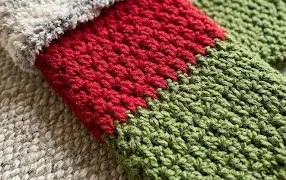
Your finished stocking brings a handmade touch to holiday decorating, and its soft fabric gives it a welcoming look whether it hangs by the mantel or holds a small gift. For a simple variation, change the main color to green, cream, or a shade that matches your home, while keeping the cuff in a contrasting yarn. You can also adjust the size by changing your hook or yarn, then checking the proportions as you work. Share a photo of your stocking on Pinterest or social media so other crocheters can see your color choices. When you’re ready for another seasonal project, explore more free crochet patterns on the blog.